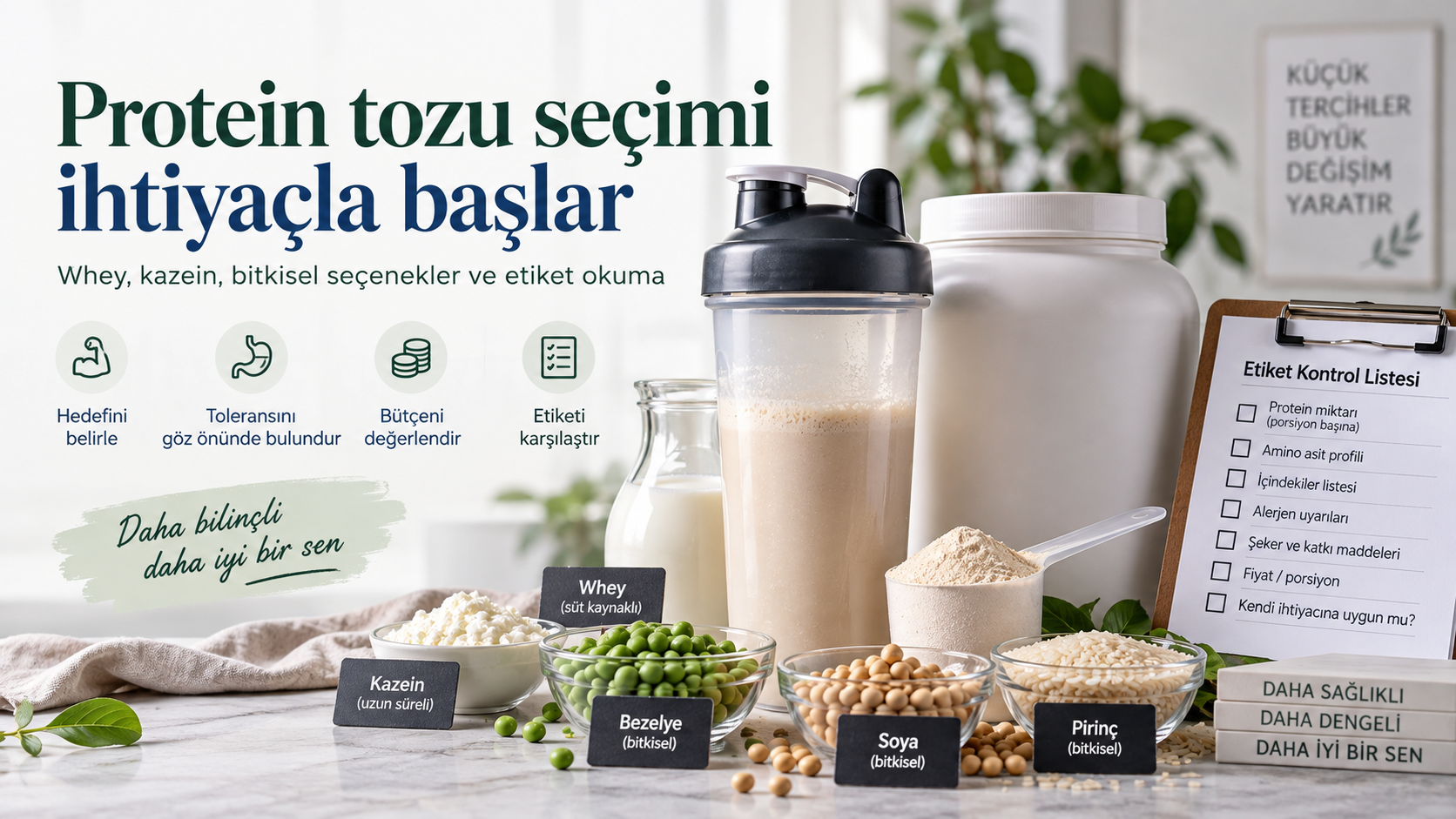
Choosing the Right Protein Powder Starts with Your Needs
When choosing a protein powder, focusing only on the brand, protein percentage, or absorption speed is not the best approach. The protein source, amino acid profile, digestibility, production method, and other ingredients are equally important. Each of these characteristics serves a different nutritional purpose.
Whey concentrate, whey isolate, hydrolyzed protein, casein, and plant-based proteins are not simply different names for the same product. Although some originate from the same raw material, their manufacturing processes and nutritional compositions can differ considerably.
Protein powders can make it easier to meet daily protein requirements. However, they do not build muscle or burn fat on their own, nor can they replace a balanced diet. If protein needs can be met through eggs, dairy products, meat, fish, legumes, and other foods, supplementation is not essential.
Making an informed choice starts with understanding how the body uses protein and how different products compare technically.
What Determines Protein Quality?
The quality of a protein source cannot be measured solely by the amount of protein it contains per 100 grams. Its amino acid composition and how efficiently those amino acids can be digested and utilized by the body are also important.
Proteins consist of amino acids. The human body can synthesize some amino acids, but nine essential amino acids must be obtained through food. Proteins containing all nine essential amino acids are commonly described as complete proteins.
Essential Amino Acids and BCAAs
Essential amino acids are involved in numerous biological processes, including the construction of muscle proteins. Three of them, leucine, isoleucine, and valine, belong to the group known as branched-chain amino acids, or BCAAs.
BCAA supplements are widely marketed in sports nutrition. However, these three amino acids alone are insufficient for muscle protein synthesis. The body also requires the remaining essential amino acids.
For this reason, a protein source that provides adequate amounts of all essential amino acids offers more comprehensive nutritional support than a supplement containing only BCAAs.
Why Is Leucine Important?
Leucine is not merely a building block of muscle proteins. It also participates in activating a cellular signaling mechanism known as mTORC1, which helps regulate muscle protein synthesis.
Because of this mechanism, leucine content is a meaningful consideration for individuals choosing protein products to support muscle growth.
One of the advantages of whey protein is its high concentration of essential amino acids, particularly leucine. In a typical whey protein, approximately 10 to 12 percent of the total protein may consist of leucine. Consequently, a serving containing 25 grams of actual whey protein may provide approximately 2.5 to 3 grams of leucine.
However, these values vary according to product composition. Consuming a particular amount of leucine does not automatically result in muscle growth. Adequate overall protein intake, sufficient energy intake, and appropriate training remain essential.
Digestibility and Protein Quality
Scientific methods such as PDCAAS and DIAAS are used to evaluate protein quality.
PDCAAS considers amino acid composition and overall protein digestibility. DIAAS provides a more detailed assessment by considering the digestibility of individual essential amino acids at the end of the small intestine.
Whey, casein, egg, and soy proteins are generally considered high-quality protein sources according to these measures. In pea, rice, and other plant-based proteins, the proportions and digestibility of certain essential amino acids may vary more substantially.
This does not mean that plant-based proteins cannot support muscle development. What matters is obtaining sufficient quantities and an appropriate variety of amino acids throughout the day.
Concentrate, Isolate, and Hydrolyzed Protein Explained
These are among the most frequently misunderstood terms on protein powder packaging.
Whey, casein, and soy identify the source of a protein, while concentrate and isolate describe the degree of protein separation and purification. Hydrolyzed refers to a process in which protein chains are broken down into smaller fragments.
Therefore, a product can be both whey isolate and hydrolyzed whey.
Whey Protein Concentrate
Whey Protein Concentrate, commonly abbreviated as WPC, is produced by processing the liquid whey separated during cheese manufacturing.
Membrane technologies such as ultrafiltration are typically used during production. These processes concentrate protein while removing portions of the water, lactose, and certain minerals. The resulting material is subsequently dried into powder.
Not all whey concentrates have the same purity. Industrial classifications include WPC35 and WPC80, which indicate their approximate protein concentrations.
WPC80 is generally produced to contain approximately 80 percent protein on a dry matter basis. However, the protein percentage of a finished flavored supplement may be lower because additional ingredients are included.
Whey concentrate generally contains more lactose and fat than whey isolate. This difference is particularly relevant for individuals with lactose intolerance.
Nevertheless, whey concentrate remains a high-quality protein source. It provides all essential amino acids and can be used to support muscle protein synthesis.
Technical Advantages
- Rich in essential amino acids and leucine.
- May require less extensive separation and purification than whey isolate.
- Often available at a more affordable price.
- May retain certain non-protein components naturally present in milk.
Important Considerations
Lactose content varies between products. Individuals who experience bloating, gas, or digestive discomfort after consuming dairy should pay attention to the total lactose content.
Whey concentrate is not an inferior version of whey isolate. For someone who tolerates dairy products and can comfortably meet daily protein requirements, paying more for isolate may offer little practical benefit.
Whey Protein Isolate
Whey Protein Isolate, or WPI, is obtained through more extensive purification of whey protein.
Manufacturing methods may include microfiltration, ultrafiltration, and, in certain processes, ion exchange technology. The objective is to remove a greater proportion of non-protein components.
Whey isolate ingredients typically contain at least 90 percent protein on a dry matter basis. Their lactose and fat levels are generally considerably lower than those found in whey concentrate.
An important technical distinction should be made here. A raw ingredient containing 90 percent protein does not mean that a flavored consumer product will necessarily have the same protein percentage. Flavorings, sweeteners, and other additives can reduce the proportion of protein in the final mixture.
The amino acid profile of whey isolate is generally similar to that of whey concentrate. Both originate from the same fundamental milk proteins. Therefore, a higher degree of purification does not necessarily produce greater muscle growth per gram of protein consumed.
Technical Advantages
- Can provide a higher protein concentration per unit of product weight.
- Generally contains less lactose and fat.
- May require a smaller amount of powder to obtain the same protein quantity.
- Depending on the formulation, may be convenient for individuals carefully managing their calorie intake.
Important Considerations
The term isolate does not mean lactose-free. Small amounts of lactose may still be present. Individuals with lactose intolerance should check the nutrition label and any verified lactose-free claims.
Furthermore, whey isolate is still a milk-derived protein. It is not a safe alternative for people with a milk protein allergy.
In practical terms, the main advantage of whey isolate is its higher protein concentration and generally lower lactose content. Its effects on muscle development should still be considered in the context of total protein intake and training conditions.
Hydrolyzed Protein
Hydrolyzed protein refers to proteins that have undergone a process in which their chains are broken into shorter peptides during manufacturing.
This process is generally performed using enzymes. It effectively reproduces part of the protein breakdown that would otherwise occur naturally during digestion.
Following hydrolysis, the product may contain free amino acids and peptides of different lengths. However, not all hydrolyzed proteins undergo the same degree of breakdown.
This difference is described by the degree of hydrolysis, commonly abbreviated as DH.
The degree of hydrolysis indicates the proportion of peptide bonds that have been broken during processing. However, this measurement alone cannot reliably determine a product's absorption speed, digestive tolerance, or effectiveness for muscle growth.
Under certain conditions, hydrolyzed whey may produce a faster increase in blood amino acid concentrations. Nevertheless, research has not consistently demonstrated that this physiological difference leads to greater long-term muscle mass or strength gains.
Technical Advantages
- Some protein chains have already been broken into smaller peptides.
- Digestive and absorption characteristics may be altered.
- May be suitable for specialized nutritional formulations.
Important Considerations
As the degree of hydrolysis increases, certain products may develop a more noticeable bitter taste. Manufacturers may compensate by using additional flavorings and sweeteners.
Hydrolyzed proteins are often more expensive. Their higher price should not be justified solely by claims of faster absorption.
Hydrolyzed whey is also derived from milk. Hydrolysis does not automatically make it safe for individuals with milk protein allergies. Specially manufactured and clinically evaluated allergy formulas should be distinguished from ordinary sports supplements.
Protein Sources and Their Biological Characteristics
The original protein source is just as important as the processing method. Dairy proteins, plant-based proteins, and collagen have different amino acid compositions.
Whey Protein
Whey is one of the two major groups of proteins found in milk. Approximately 20 percent of the total protein in cow's milk is whey, while the remaining 80 percent is casein.
Whey protein does not consist of a single molecule. It contains several protein fractions, primarily beta-lactoglobulin and alpha-lactalbumin.
One important characteristic of whey is its ability to increase circulating amino acid concentrations relatively quickly after digestion. It is therefore commonly classified as a fast-digesting protein.
Its high leucine content and complete essential amino acid profile have made it a popular choice following resistance training.
However, muscle protein synthesis does not occur exclusively during the first few minutes after exercise. The muscle protein synthesis response to exercise may remain elevated for a considerably longer period.
For this reason, whey does not need to be consumed within an extremely narrow post-workout window. Total daily protein intake and its distribution across meals are more fundamental considerations.
Casein Protein
Casein accounts for the majority of protein found in milk. Its primary distinction from whey involves not only its amino acid composition but also its behavior during digestion.
Casein proteins form structures known as micelles within milk. Micellar casein, in particular, tends to form a clot in the acidic environment of the stomach. This characteristic can influence gastric emptying and the rate at which amino acids enter the bloodstream.
As a result, casein is associated with a slower and more prolonged release of amino acids compared with whey.
It is important to recognize that casein also contains all essential amino acids. Slower digestion does not mean it is a lower-quality protein.
Different casein products are available, including micellar casein and calcium caseinate.
Micellar Casein
Micellar casein is produced using methods that largely preserve the natural micellar structure found in milk. It may create a thicker texture when mixed with liquid and is known for its relatively slow digestion.
Calcium Caseinate
Calcium caseinate can be produced by treating acid-precipitated casein with calcium. It may have different physical properties, solubility, and digestive behavior compared with micellar casein.
Grouping these products together without distinction can obscure meaningful technical differences.
Casein is commonly used during long intervals between meals or to provide amino acids overnight. Some studies have demonstrated that consuming approximately 30 to 40 grams of casein before sleep can increase overnight muscle protein synthesis.
However, this finding does not mean everyone needs to consume casein before bed. For individuals already meeting their daily protein needs, the long-term benefits of additional supplementation depend on individual circumstances.
Soy Protein
Soy is one of the most nutritionally significant plant-based protein sources.
Soy protein contains all nine essential amino acids and is therefore classified as a complete protein. However, its amino acid proportions are not identical to those of whey.
Soy generally contains a lower proportion of leucine than whey. Sulfur-containing amino acids such as methionine may also be limiting when evaluating its protein quality.
Commercial products include soy protein concentrate and soy protein isolate. Soy isolate is produced by removing a greater proportion of fat and carbohydrate components.
Soy also contains plant compounds known as isoflavones. Their concentration varies according to the raw material and processing methods. Not all soy protein products contain the same amount of isoflavones.
Common claims that soy consumption lowers testosterone levels in men are generally not supported by clinical research examining typical dietary intake.
Soy protein can be particularly useful for people following a vegan diet. When used to support muscle development, total daily protein intake, energy intake, and the training program remain the most important considerations.
Pea Protein
Pea protein is typically obtained from yellow peas. Processes such as grinding, fractionation, filtration, and other separation techniques may be used to increase protein concentration.
One notable characteristic of pea protein is its relatively high lysine content. However, sulfur-containing amino acids such as methionine are present in more limited proportions.
Consequently, its amino acid profile is not identical to that of whey or soy protein.
Pea protein also contains leucine and can contribute meaningfully to daily protein requirements when consumed in sufficient amounts. Nevertheless, equal quantities of pea and whey protein may provide different amounts of leucine and other essential amino acids.
Some studies suggest that pea protein can support muscle development when adequate quantities are consumed alongside an appropriate resistance training program.
Pea protein may be advantageous for individuals seeking a dairy-free alternative. However, the absence of lactose does not guarantee that the product will cause no digestive discomfort.
Manufacturing methods, residual fiber, flavorings, and sweeteners can all influence digestive tolerance.
Rice Protein
Rice protein is commonly produced by concentrating protein fractions obtained from brown rice.
One important characteristic of its amino acid profile is its relatively low lysine content. However, it may complement pea protein by providing certain sulfur-containing amino acids in different proportions.
This is why combinations of pea and rice proteins are frequently found in plant-based protein formulations.
The proportions used in these blends are important. Simply listing two plant protein sources on the packaging does not automatically guarantee an optimal amino acid profile.
Raw material quality and contaminant testing are also relevant for rice protein. Rice plants can accumulate elements such as arsenic depending on their growing environment. Reliable sourcing and appropriate testing procedures are therefore particularly important.
Other Plant-Based Proteins
Proteins derived from pumpkin seeds, hemp, fava beans, potatoes, and various grains are also used in commercial formulations.
These sources do not have identical protein concentrations, essential amino acid profiles, or digestibility characteristics.
For example, properly purified potato protein can be a high-quality protein source. Hemp protein, depending on the manufacturing process, may retain more fiber and have a lower protein concentration.
When choosing a plant-based protein, attention should be given not only to the number of plant sources included but also to the total protein quantity and, where available, the essential amino acid profile.
Collagen Protein
Collagen is one of the primary structural proteins found in the body's connective tissues. It plays important roles in the skin, tendons, ligaments, cartilage, and other tissues.
Its amino acid composition differs substantially from whey, casein, and soy proteins.
Collagen is rich in glycine, proline, and hydroxyproline. However, it does not contain tryptophan and provides limited amounts of certain other essential amino acids.
For this reason, collagen is not considered a complete protein.
Individuals looking for a primary protein supplement to support muscle development should not treat collagen as nutritionally equivalent to whey or soy.
Research is investigating the potential benefits of collagen peptides for connective tissue and joint health. However, these findings do not establish collagen as a replacement for high-quality complete proteins when the objective is muscle protein synthesis.
How Important Is Protein Absorption Speed?
Fast absorption is one of the most frequently used claims in protein supplement marketing.
There are genuine differences in the digestive behavior of whey, casein, and hydrolyzed proteins. However, faster entry of amino acids into the bloodstream is not the same as greater long-term muscle growth.
Muscle protein synthesis is influenced by circulating amino acid availability. The training stimulus, age, overall energy intake, meal composition, and total daily protein intake also play important roles.
Mixing protein powder with water or milk, consuming it alongside other foods, and adjusting serving size may all influence the digestive response.
Therefore, ranking protein products according to their muscle-building effectiveness based solely on absorption speed measured under laboratory conditions would be misleading.
How Much Protein Do You Need Each Day?
Protein requirements vary according to body weight, age, training intensity, energy balance, and health status.
For healthy adults who exercise regularly, approximately 1.4 to 2 grams of protein per kilogram of body weight per day is a commonly recommended range for many athletes. Some individuals may require lower or higher amounts.
For example, a healthy individual weighing 75 kilograms who trains regularly would have an estimated daily intake range of approximately 105 to 150 grams of protein.
There is no need to obtain all of this protein from supplements. Protein consumed through ordinary meals counts toward the daily total.
Consuming approximately 20 to 40 grams of high-quality protein per meal is a practical approach for supporting muscle protein synthesis in many healthy adults. However, an appropriate serving depends on age, body weight, and training conditions.
Older adults, in particular, may experience changes in how their muscles respond to dietary protein. Individual protein plans should therefore not be based exclusively on general averages.
Technical Comparison of Protein Powders
| Protein Type | Key Characteristics | Main Reason to Consider It |
|---|---|---|
| Whey Concentrate | High-quality protein with variable lactose and fat content | Balance between affordability and protein quality |
| Whey Isolate | Raw ingredients typically containing at least 90 percent protein, with low lactose levels | Higher protein concentration and reduced lactose intake |
| Hydrolyzed Whey | Protein chains partially broken down into smaller peptides | Specialized digestive or formulation requirements |
| Micellar Casein | Slower digestion and prolonged amino acid release | Long intervals between meals |
| Soy Isolate | Plant-based protein containing all essential amino acids | Vegan diets and avoiding dairy proteins |
| Pea Protein | Relatively rich in lysine but limited in methionine | Dairy-free plant-based alternative |
| Rice Protein | Relatively low in lysine and useful in complementary blends | Plant-based protein combinations |
| Collagen | Incomplete amino acid profile without tryptophan | Distinct nutritional applications involving connective tissues |
The characteristics shown in the table describe general product categories. Actual protein concentrations, amino acid profiles, and other ingredients can vary between manufacturers.
How to Read a Protein Powder Label Before Buying
Determining whether a protein powder is suitable requires more than looking at the large numbers printed on the front of the packaging.
Calculate the Protein Percentage
Consider a product containing 24 grams of protein in a 30-gram serving.
Its protein concentration by weight is 80 percent.
Now consider another product providing 25 grams of protein in a 35-gram serving. Its protein concentration is approximately 71 percent.
Although the second product provides slightly more protein per scoop, its protein concentration relative to the total amount of powder is lower.
This is why both protein per serving and protein per 100 grams should be examined.
Examine the Amino Acid Profile
A reliable amino acid analysis published by the manufacturer can make product evaluation easier.
Total essential amino acid content and leucine concentration are particularly relevant when assessing products intended to support muscle protein synthesis.
However, a high leucine claim alone is not sufficient. The remaining essential amino acids must also be supplied in appropriate quantities.
Some products may contain added free amino acids intended to make protein measurements based on total nitrogen appear more favorable than the actual nutritional quality would justify. This practice is commonly known as amino spiking.
Independent laboratory testing and transparent ingredient declarations can help consumers assess these risks.
Compare the Actual Cost of Protein
The price per kilogram of powder is not always the most meaningful comparison.
If one product contains 80 grams of protein per 100 grams while another contains 65 grams, equal package weights do not provide equal amounts of protein.
A more useful approach is to divide the total package price by the actual amount of protein contained in the package.
This provides a more realistic basis for comparing brands and package sizes.
Consider Digestive Tolerance
If a protein powder causes bloating or digestive discomfort, the protein itself is not necessarily responsible.
Lactose, sugar alcohols, certain sweeteners, thickening agents, and large serving sizes can all affect tolerance.
Lactose intolerance and milk protein allergy are different conditions. Lactose intolerance concerns the digestion of milk sugar, whereas milk protein allergy involves an immune response to proteins found in milk.
Therefore, lactose-free whey protein is not suitable for individuals with a milk protein allergy.
Check Independent Testing
For competitive athletes, independent batch testing is particularly important.
Such testing can help reduce the risk of contamination with prohibited substances. However, no certification can guarantee absolutely zero risk.
Microbiological testing, heavy metal screening, and manufacturing quality are also important aspects of product safety.
Which Protein Powder Might Be Right for You?
Choosing a protein product requires evaluating its technical characteristics alongside individual nutritional needs.
For someone who tolerates dairy products well and prioritizes affordability, whey concentrate may be entirely sufficient.
An individual seeking to reduce lactose intake may consider a whey isolate with verified low lactose content. However, people with milk protein allergies should avoid both whey and casein products.
For those following a vegan diet, soy protein or appropriately formulated pea and rice protein blends may be suitable options.
Casein may be considered when there are long intervals between meals. Nevertheless, it is not necessary when total daily protein requirements are already being met.
Hydrolyzed proteins should not automatically be considered superior simply because they may be absorbed more quickly.
Conclusion
The technical characteristics of protein powders matter. However, greater purification, faster digestion, or a higher price does not necessarily translate into better results for every individual.
The primary differences between whey concentrate and whey isolate involve protein concentration, lactose content, and fat content. Hydrolyzed proteins have different peptide structures. Casein is distinguished by its digestive behavior, while plant-based proteins should be assessed according to their amino acid profiles.
Collagen, because of its amino acid composition, is not nutritionally equivalent to the complete protein sources commonly used to support muscle development.
The purpose of choosing a protein powder is not to purchase the product with the most advanced processing technology. It is to meet a genuine nutritional need with an appropriate balance of protein quality, ingredient composition, digestive tolerance, and cost.
Before purchasing a supplement, it is advisable to assess the overall diet and, when necessary, consult a registered dietitian to establish an appropriate personal protein intake and supplementation plan.